Hello Good Reader…
Let us continue on with our impossible mission of making the dullest topic on earth– screenwriting format– somehow, some way, sexy.
Soldiering on!
ACTION LINES
Keep it tight! Don’t overwrite! It’s all well and good to tell you this, but how many action lines is too many? Are there rules?
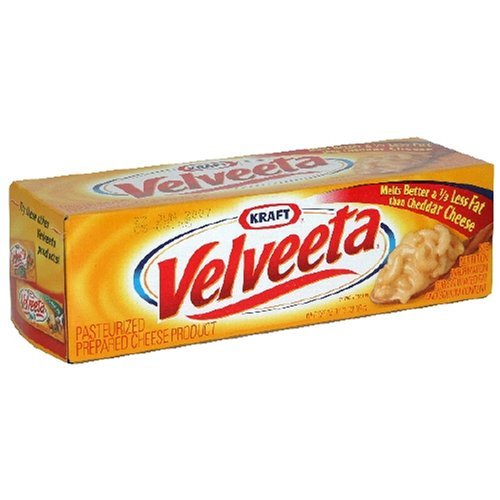
Not really. But my own rule of thumb is: When your screen direction can’t be covered by a block of Velveeta cheese, it’s too long.
Examine every word, every line. Is it necessary? If you cut it, would the scene still make sense? If the answer is yes, then cut it.
Generally, five lines or less is a good break point. Cut on natural camera breaks; if we see a new character, or the camera would naturally move, add white space, go to the next line and start a new paragraph. This will make your script cleaner. Let’s check out an example. Look at this passage from Gangs Of New York:
[scrippet] EXT. STREET DAY (WINTER) WINTER WIND blows across a scene as strange and bleak as an alien planet. VALLON, carrying his cross high, steps through the doorway. The OTHERS slowly follow VALLON out of the building, which is three stories high and maybe a block long. A dilapidated sign identifies it as the 5 Paints Brewery. It is the tallest structure in the midst of low, squalid SHACKS, winding ALLEYS as narrow as a snakes back, and DIRT STREETS filled with ruts, mud and filthy snow. A few PIGS wander forlornly about, rooting for garbage.WASH hangs stiff, in the middle of the square, from a peculiar monument erected to some forgotten war hero. The Brewery occupies one side of a SQUARE surrounded by some storefronts and a couple of collapsed wooden sidewalks. If this place resembles anything at all, it’s a horrible hybrid of London’s Limehouse and a pioneer town in the American West whose best days have long passed–or never came at all. VALLON stands still, staring across the square past the monument. His battalion of irregulars waits for his signal. Now… very, very slowly…from around both sides of the monument comes ANOTHER GANG, in size the same as VALLON’s, men and women both, armed like Visigoths with HOMEMADE WEAPONS: knives, pitchforks, building blocks and bricks, boards with sharp nails protruding from the ends. Every member of this second group is dressed in a long DUSTER which reaches to the ankles. Several MEN in front of the group sport dusters made of leather.[/scrippet]
Whoa, Scorsese broke the Velveeta Cheese rule! You said to give white space! You said keep the screen description to essentials!
Yes, I did. I also told you there is no one single way to write a script. There will always be exceptions to the general rule.
Maybe Martin Scorsese asked the writers to put in maximum detail (if Marty tells you he wants the script written long hand in green Sharpie, will you inform him that it’s improper format?) Maybe the producers wanted it that way. You, the Unknown Screenwriter, don’t have Scorsese; you don’t have producers. You’re looking for a way in, so as a general rule: Don’t make your screen direction into a giant block of Velveeta Cheese. Give white space.

If it’s a critical scene, sure, go Dylan Thomas on their asses, lay out the 3- dollar verbs. But if a character walks into Starbucks, please don’t tell me about the fake burnt orange flame logs in the fireplace, or the vermilion stitchery of the loungers, or how many single-pump caramel frappuccino drinkers are working screenplays on their Macs! Not unless it impacts story.
CHARACTER INTRODUCTIONS & DESCRIPTIONS
The first time a character is seen you should capitalize the name whether they speak or not. If they are important characters give them a description.
Characters do not get names unless they impact story. Limit the number of character names the reader must remember, at the top of movie especially. Only give NAME-names to characters that appear in multiple scenes. Otherwise they get jazzy NON-names.
Anyone can write MAN 1, or WAITER. You have to do better. You have to put thought into your character names, even if they don’t get one. What’s that mean? Be descriptive with No-Name characters: If the gas station attendant has a MAGA-hat on or mustard stain on his collar he becomes MUSTARD STAIN or MAGA-HAT DIPSHIT when he speaks.

The writer Bruce Vilanch once said something in one of my classes that resonated. When you describe your lead character you should imagine someone of star magnitude reading it, and reading the description of their character. Protagonist/antagonist descriptions are the first thing an actor reads, so they need to be worked. Describe the visible essence of the character.
Vividly introducing characters will help take your writing to the next level. Anyone can describe a character as in their 30’s, wearing jeans. Versus the first time we see the Billy Bob Thornton character in Bad Santa:
[scrippet]
Great adjective choices, specificity even on the cigarette he smokes. Totally visual. Let’s try one more, from Assassins:
[scrippet] INT. INTERNATIONAL TERMINAL – DAY 17 Tired travelers trudge, clogs the concourse. But one man moves briskly. Singular of purpose. Dressed stylishly, we don’t quite see his face. He’s BAIN, a presence, and for whatever reason, no one ever seems to be in his way.[/scrippet]
Short but sweet. Makes you wonder what his “purpose” is or why “no one ever seems to be in his way.” This is what you want from your own writing. Tease the reader; make them want to turn the page.
You can also introduce characters through their surroundings, the rooms that they in giving us the visual clue, the books he reads tells us a ton, from Croupier:
[scrippet]INT. JACK’S BASEMENT FLAT – SITTING ROOM – DAY
One last point on this subject, remember: A pro gets away with murder. You won’t.
It’s enlightening to go to IMSDB and read scripts that break every rule in the book. So how far can you push it, yet keep within the bounds of “acceptable” formatting? Let’s look at a character description from Light Sleeper:
[scrippet]
The voice is Paul Schrader (Taxi Driver), one of the great screenwriters. His character description is poetry. Contrary to the “just tell me who’s in the shot and what’s happening” advocates, I will say there is a place for poetry in screenplays. If you’re writing like this the chances are good you will eventually separate from the crowd. Yet, look at the above example: Half of it, at least, cannot be seen by the camera. One could argue that passages like “drifting toward an unknown destination…” and “The destination is love” don’t belong. Camera can’t see ‘em, so out they come, right?
Descriptions like this are the art of screenwriting. This is what will separate you—knowing when and how to break the rules, and having the writing chops to break them like nobody else.
GO VERTICAL
Remember with action lines, you want the eye to roll down the page, to make the script a “good read.” Part of that is making the story fly down the page for the burned-out eyes of producers, readers, agents, etc. How do you do that? Go vertical. Keep the reader’s eyes moving vertically down the page. For example, from Seven:
[scrippet]
The “tick tick tick” device is terrific. It moves your eye down the page, makes you wonder what’s coming next.
Another method of shaking up the reader visually is…
SINGLE LINE SPACING:
Condensing screen direction offers the reader a more visceral experience, faster, raw and more exciting. While I don’t use this style, it’s totally viable, as here from Alien 3 (Walter Hill & David Giler draft):
[scrippet]
SOUNDS/ VOICE OVER VS. OFF SCREEN
Sounds don’t need to be capitalized. Older scripts often did cap them: “The Chihuahua BARKS.” Again, no absolutes. There are scripts littered with WHOOSHES! SLAMS! BAMS! For example, this from Hellboy:
[scrippet]Leaving a trail of blood, Broom crawls to a dead G.I. and grabs a grenade from his belt.
Here, it works. But many scripts don’t have a single FFFFT! This is a stylistic thing. If you want to cap sounds, cap ‘em. Just be consistent with your choice.