2011 June | Script Gods Must Die

 
Screenwriting with attitude


→ Contact

»
S
I
D
E
B
A
R
«
Services

PROFESSIONAL SCREENWRITING SERVICES

Comprehensive, line-by-line screenplay consultancy.

Affordable Prices.

Fast, personal attention.

→ What Do We Offer?

New Book Released!
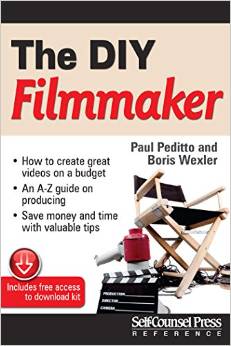
Purchase your copy of Paul Peditto & Jessie Coleman's Writing Screenplays!.


Pages
  • About Paul Peditto
  • Contact Us
  • Screenplay Consulting Services
  • Subscribe to Script Gods Must Die!
  • Testimonials
Recent Posts
  • Chat- Weekends 5 and 6
  • Confessions Of A Genius Script Reader
  • Chat- Weekend 4
  • Anatomy Of A Scene- New York Times
  • Chat, Weekends 2 and 3
Recent Comments
  • paul peditto on Confessions Of A Genius Script Reader
  • Kaj Kjellesvig on Confessions Of A Genius Script Reader
  • Celesta on Ted vs. Moonrise Kingdom
  • paul peditto on Format: 3: Montage vs. Series Of Shots
  • Drew on Format: 3: Montage vs. Series Of Shots
Search and hit Enter!
Surivival Strategies For The Unknown Screenwriter: Schmoozing
Jun 28th, 2011 by paul peditto


SCHMOOZE

verb /SHmo͞oz/
schmoozed, past participle; schmoozed, past tense; schmoozes, 3rd person singular present; schmoozing, present participle

  1. Talk intimately and cozily; gossip
  2. Talk in such a way to (someone), typically in order to manipulate, flatter, or impress them

A MEETING IN THE MAP ROOM

Meeting a friend at the Map Room, Chicago. Waiting for her, I see a producer I know, an acquaintance. This is someone I’ve come close to working with but never quite did. We shake hands, first name basis and friendly. His name is attached to several well-known movies (Mad Dog And Glory, Henry: Portrait Of A Serial Killer.) Being one of the few actively working producers in town, he is a good man to know.  We chat about the status of a project on which we almost worked together. On the back burner, it seems. “Difficulty in raising the finances.” No shit. The recession is killing independent financing.

Turns out my producer friend is here for his own meeting. And over to the table saunters Steve Conrad.

Steve is a Chicago guy, lives in town, went to school at Northwestern. He also happens to be, aside from David Mamet, one of the few screenwriters living in Chicago who actually makes a living at it. His resume speaks for itself (The Pursuit of Happyness, The Weather Man, Wrestling Ernest Hemingway, the Promotion). On the screenwriting Food Chain, Steve is as far above me as I am above the chum-eating California Golden Seal.

We shake hands, friendly guy. Steve hasn’t heard of me, but interestingly, we’ve both taken passes at a draft of the same project . This is an adaptation of a tough Nelson Algren novel (more on this script next week) set in Chicago amidst Polish youth gangs in the 40s. Not a popcorn movie but with an undeniable pedigree of a man who won the National Book Award. We laugh because no one seems to be willing to take a risk on this harsh material.

Now, between the producer and Conrad, this has turned into a nice networking opportunity, laid out right on my plate. My friend still hadn’t arrived. I could, in good conscience, order a beer and hang. We’re all Chicago guys, after all.

I didn’t.

I got up, shook hands with Conrad and the producer, and split.

Why? Why not stick around, press my projects, try to make something happen?

Because lunch at the Map Room, for them, wasn’t about me.

Folks, you need to develop a sense about schmoozing. This is the networking aspect writers so often dread. It’s part of the deal of trying to be a professional, no doubt. At the same time, I would beg you to not become the clutching-grasping-desperate screenwriter cornering industry professionals with stacks of screenplays at events like Screenwriting Expo.

Please don’t become the stalker.

My exit was good form. What came from this chance meeting was an email from the producer asking for my latest script. I passed it along. Nothing came of it, but the contact may yet be useful.

If you don’t want to be the Unknown Screenwriter your whole life, chances are you’ll have to learn the art of the schmooze.

Here’s an instructional video: Truly cringe-worthy, not likely to help in the least, but sadly funny as hell. Happy schmoozing!


Post Your Comment! »
Survival Strategies For The Unknown Screenwriter
Best Blogs: johnaugust.com
Jun 22nd, 2011 by paul peditto

You’d have to be under the proverbial rock to be a screenwriter and not know about johnaugust.com. It’s the first blog I’ll profile and it’s my #1.

God knows how many hours it’s taken John to write 245 pages worth of blog posts; nor how long it would take to read every post archived since 2003. His site is an unparalleled accumulation of knowledge given over for dollar $0.

Where does he find the time? The guy develops an app for Final Draft on the iPad, is developing a Broadway musical adaptation of Big Fish…and that’s just this half of June.

Here’s what John August is not. He is not a Type A, self promoting-consultancy-hustling-namedropping-faster-than-you blogger. That’s because John–like others I will profile here–doesn’t need your money.

Big Fish, Charley and the Chocolate Factory, Corpse Bridge…not bad. And those are only three of the movies he’s written.

Hard to pick from eight years worth of posts, but let’s go back 245 pages to 2003. This, for instance, from September ’03 on How I Got My Agent (John’s writing is italicized):

“Some of my most talented writer friends have trouble getting a good agent, even though they live in Los Angeles and are doing everything “right.” It’s frustrating for them and it’s frustrating for me. If we were all beginning screenwriters living in Wichita, we could chalk it up to being some sort of California conspiracy, but it’s harder when you know the agents involved and understand their very difficult job.

So before getting into any how-to, let me lay down a few simple truths:

  1. You don’t have to have an agent. It’s not like a driver’s license; you’re not breaking any laws. Even though I had an agent at the time, the first few writing jobs I got were through other contacts I’d made at grad school and working as an assistant. My agent handled the deal-making, but in truth I was being paid the least the companies could legally pay me (called “scale”), so a lawyer could have done the same job.
  2. Agents need clients who work. That sounds obvious, but other than disliking your writing, it’s the main reason an agent will pass on you. Before she signs you, the agent has to believe that (A) enough people will be willing to pay you good money to write movies for them, and (B) you’ll be able to make those people happy.
  3. Most beginning writers worry about agents way too much. After fantasy-casting their script and practicing their acceptance speech, a newbie writer spends 20 minutes a day fretting about an agent. It’s wasted time. Work on your script; enter some competitions; make a real plan. Anything is better than sitting around worrying.

In my first year of graduate school at USC, I wrote a script called HERE AND NOW. It was a romantic tragedy set in Boulder, Colorado (my home town), and in hindsight was very overwritten. But still, it was well-overwritten. Friends who read it liked it, and I could get about 35% of readers to cry, which ain’t bad.

An instructor at USC took a shine to it, and gave it to a literary agent at CAA. Every day when I came home from work (I was interning at Universal), I checked the answering machine, hoping to hear that CAA loved it and wanted to sign me. For more than a month, nothing. I was paralyzed and despondent. Finally, the agent called the instructor and said no, thanks.

Those weeks spent waiting were completely wasted. It was an important lesson to learn.

That same summer, a friend in my grad program was interning for a producer, and gave him my script to read. The producer liked the writing and wanted to submit it to the studio where he had an exclusive deal. Supressing my joy, I said sure, but that I needed to get an agent first, and asked if he could help.

We made a list of agents we thought would be right — all of them smaller than the powerhouses like CAA. He called and got them to read it. I ended up signing with one at a boutique lit agency about a week later. That first script never sold — and probably shouldn’t have. But it got me meetings with a lot of other people whom I’d later work with.”

With the announcement of Amazon Studios came a blog post last November that was controversial:

“If Amazon Studios were a simple finance and production outfit like Relativity or Morgan Creek, there would be nothing more to say. But Amazon Studios has an unusual strategy:

Amazon Studios invites filmmakers and screenwriters from all over the world to submit full-length movies and scripts, which will then get feedback from Amazon readers, who will be free to rewrite and amend. Based on reaction (“rate and review”) to stories, scripts and rough “test” films, a panel of judges will award monthly prizes.

Several readers have written to ask my take on all this. I won’t conjecture about anything beyond what’s on the press release and website, but I’m left with some pretty big questions. I have a hunch other screen-bloggers will be tackling some of the glaring ones, like copyright, authorship and the 18-month free option.

So I’ll just ask one:

Do you really want random people rewriting your script?

To me, this feels like the biggest psychological misstep of the venture. Sure, most aspiring screenwriters yearn for access to the film industry and the chance to get their movies made. That’s why they enter screenwriting competitions, including things like Project Greenlight, which feels like its closest kin.

But here’s the thing: each of these writers wanted to get his movie made. I’ve never met a single screenwriter who hoped anonymous strangers would revise him.

Can I make it so that no one else can revise my original work?

No. But if someone makes changes that are bad, their version is not likely to get a lot of attention. And if someone comes along and makes your work better, you’re more likely to win a prize and get your project made. Sometimes other people can bring a different viewpoint or a different set of skills that take the story in a new direction or add new elements that make it even more compelling.

Look, I know your script was about a blind cheerleader in Harlem. But ramsey22′s revision making the cheerleader an elephant is so much funnier. And blueGoblin has a good point: a safari park is a better setting for a story about elephants.

In software development, the open source movement has succeeded in bringing teams of strangers together. But writing code is a lot different than writing a screenplay. A bad line of code is obvious; it doesn’t do what it needs to do. A bad line of dialogue is a judgement call. A thumbs-up, thumbs-down voting system isn’t likely to fix this.

Hollywood already has a bad track record of messing up projects by bringing in too many writers — and that’s when they’re paying people who have already written and produced movies. The idea that an undiscovered screenwriter in Wichita will rewrite someone else’s screenplay on his own time seems far-fetched, and to me smacks of spec labor.”

John August strikes me as an understated guy, very much the gentleman, as you can see by his measured reader responses. Here, for instance, about why we must have board-game movies:

“So, I understand the merits of re-making movies from the past, or making old TV shows into features. I also get it from a studios perspective inasmuch as it’s a known property that has a fanbase, or has made a profit in the past.

But when I see studios making adaptations of toys like “Magic 8 Ball” or “Battleship” or “Stretch Armstrong” it really bums out the aspiring writer in me. It makes me think Hollywood doesn’t want my original idea. Can you talk me down from the ledge?

– Logan

Los Angeles

Logan, I’m right there on the ledge with you. But when you look down past your shoelaces, you realize that it’s not rocks and crashing waves below. The ledge we’re standing on is about eight feet high. At the bottom is concrete.

Jump wrong, and it’s going to be painful. Jump carefully, and you’ll be fine.

Yes, I rolled my eyes when the “Battleship” movie was announced. But I’ll happily see a modern naval war movie, and if it has to be named after a Milton Bradley property, so be it. A hidden upside to writing a movie based on just a title is that the screenwriter has huge latitude, unlike a book or TV adaptation.

Pendulums swing. It was dumb to make a movie out of a theme park ride before Pirates of the Caribbean. This trend towards making movies out of properties with no inherent narrative will eventually end. (A big success from an original like Inception might help.) In the meantime, let’s root for the best versions of these projects….”

If I was a break-in screenwriter, I’d look for truth-tellers and teachers. I’d want a mentor who would fire me up, inspire me, and raise me up instead of constantly beating me down with the odds against me. John August is often a source of inspiration, as a May Post on Christopher Hitchens shows:

“As he loses his voice to cancer, Christopher Hitchens writes about the idea of literary voice:

‘To my writing classes I used later to open by saying that anybody who could talk could also write. Having cheered them up with this easy-to-grasp ladder, I then replaced it with a a huge and loathsome snake: “How many people in this class can talk? I mean, really talk?” That had its duly woeful effect.

I told them to read every composition aloud, preferably to a trusted friend. The rules are much the same: Avoid stock expressions (like the plague, as William Safire used to say) and repetitions. Don’t say that as a boy your grandmother used to read to you, unless at that stage of her life she really was a boy, in which case you have probably thrown away a better intro. If something is worth hearing or listening to, it’s very probably worth reading. So, this above all: Find your own voice.’

College was the first time I started writing how I speak.

Or, more accurately, college was when I stopped trying to write the way I thought I should write. Whether through explicit instruction (topic sentences, Roman outlines) or imitative insecurity (we all had a Hemingway phase), any unique quality in my prose had been flattened. The occasional quirks were mostly borrowed from Spy magazine, whose pithy precision I worshipped without really understanding.

A freshman year newswriting class probably changed me more than anything. J54 taught us how to align fact-bearing sentences in a deliberate pyramid structure so that the story could be truncated at any point without losing its meaning.

We learned the rules. We wrote the articles. The process was almost automated; given the same facts, any two news writers should generate very much the same story.

I hated it. I revolted. Why should I waste my time writing something anyone else could have churned out?

Writing isn’t harder than speaking, but it’s lonelier. It’s a conversation with someone who isn’t there.

When you’re writing, you end up hearing your own voice a lot. I think that’s why so many people struggle with it. We don’t like to be alone with our thoughts. They scare us. But in the same way people don’t stutter when talking to a dog, it helps to envision a friendly reader at the far side. Let writing be talking with someone you like.”

John, I’ve learned a lot from you. Thanks for your contribution.

Post Your Comment! »
Best Blogs
Black List 2010
Jun 15th, 2011 by paul peditto

More than enough has already been written about the famous Black List. If you haven’t heard of it:

“THE BLACK LIST was compiled from the suggestions of over 290 film executives, each of whom contributed the names of up to ten of their favorite scripts that were written in, or are somehow uniquely associated with, 2010 and will not be released in theaters during this calendar year. This year, scripts had to receive at least five mentions to be included on THE BLACK LIST.  It has been said many times, but it’s worth repeating: THE BLACK LIST is not a “best of” list. It is, at best, a “most liked” list. Enjoy. All black everything.”–blcklst.com

Of the 75 scripts, all had agency representation. 60 came from CAA, WME, ICM, and UTA. The other 15 came from a total of nine other agencies.

As a spec screenwriter, you look for trends– what makes the list, what gets made, genres, new writers, etc. Here are a couple things I noticed from the 2010 Black List:

  • INSPIRED BY TRUE STORIES

Out of 75 Black List movies, 10 are inspired by real-life people or events.

COLLEGE REPUBLICANS by Wes Jones
“Based on true events. Aspiring politician Karl Rove runs a dirty campaign for national College Republican Chairman under the guidance of Lee Atwater, his campaign manager.

JACKIE by Noah Oppenheim
“Jackie Kennedy fights to define her husband’s legacy in the seven days immediately following his assassination.”

MARGIN CALL by JC Chandor
“Based on true events, the final twenty-four hours of Lehman Brothers.”

AMERICAN BULLSHIT by Eric Warren Singer
“The true story of Abscam, the FBI’s 1980 undercover sting operation of Congress to root out corruption which was the brainchild of the world’s greatest con man.”

ARGO by Chris Terrio
“The true story of how the CIA, with help from Hollywood, used a fake movie project to smuggle hostages out of Tehran during the 1979 hostage crisis.”

GOLD by Patrick Massett & John Zinman
“The true story of the biggest securities exchange fraud in United States history.”

THE BUTLER by Danny Strong
“The story of African-American White House butler Eugene Allen, who served eight United States presidents from 1952 to 1986.”

THE FLIGHT OF THE NEZ PERCE by E. Nicholas Mariani
“The true story of Chief Joseph and his resistance to his tribe’s relocation to a military settlement in Idaho during the 1800s.”

NESS/CAPONE by Grant Myers
“The true story of young Elliot Ness taking down Al Capone.”

O.K.C. by Clay Wold
“An ambitious legal aide working for the Timothy McVeigh defense team tries to get tot he bottom of what really happened during the Oklahoma City bombing.”

  • RE-IMAGINING OF FAIRY TALES, LEGENDS, REAL-WORLD PEOPLE OR EVENTS

Plenty of Black List scripts use a real person, legend or fable as a take-off point; keep the commerciality of the name or event, but come at it from a fresh, “re-imagined” angle. 7 of 75 fit into this category:

SNOW WHITE AND THE HUNTSMAN by Evan Daugherty

“A re-imagining of the story of Snow White in which the huntsman sent to kill her becomes her mentor.”

ABRAHAM LINCOLN: VAMPIRE HUNTER by Seth Grahame-Smith
“When the mother of future United States President Abraham Lincoln is murdered by a vampire, he begins a lifelong vendetta to rid the world of the heinous creatures.”

DARK MOON by Olatunde Osunsanmi
“Using found footage, story explores the possibility that manned moon missions did not stop with Apollo 17.

HYDE by Cole Haddon
“An allegedly rehabilitated Dr. Jekyll is pulled out of prison to help hunt a new monster who seems to be using an improved version of the Hyde serum.”

THE EVER AFTER MURDERS by Ian Fried
“In a dark metropolis populated with characters from classical folklore, detectives Tom Thumb and Rachel Riding investigate a murder that brings them into contact with the city’s most dangerous inhabitants.”

MURDOCH by Jesse Armstrong
“As his family gathers for his birthday party, Rupert Murdoch tries to convince his elder children to alter the family trust so that his two youngest children by his newest wife will have voting rights in the company.”

F*CKING JANE AUSTEN by Blake Bruns
“Two friends angry at Jane Austen for creating unrealistic romantic expectations among women today get sent back in time to the nineteenth century. The only way for them to return home is for one of them to get Jane Austen to fall in love and sleep with him.”

  • HITMEN AND ASSASSINS

Hollywood loves hitmen, no news there. Several made the list:

FAMILY GETAWAY by Jeremiah Friedman & Nick Palmer
“A man whose family doesn’t know he’s an assassin must protect them during a cross-country car chase when rival killers show up.”

LOOPER by Rian Johnson
“In the present day, a group of hitmen are sent their victims from the future.”

GRAY MAN by Adam Cozad
“American operative Court Gentry, also known as the Gray Man, races against time and teams of government assassins in an effort to save his family.”

HIT AND RUN by Owen Yarde
“A young man discovers that the undertaker who recently hired him as his driver is actually a hit man for the mafia.”

HOOF HARRINGTON’S GREATEST HITS by Dutch Southern
“An aging, semi-retired hitman recalls his murderous career while trying to kill the billionaire who has put out a contract on his life.”

  • PHENOMENAL CONCEPTS

The reason most scripts make the Black List is concept. While many are great, these stand out for me:

ALL YOU NEED IS KILL by Dante Harper
“A new recruit in a war against aliens finds himself caught in a time loop where he wakes up one day in the past after having been killed on the battlefield.”

HUNGER GAMES by Billy Ray
“Based on the book by Suzanne Collins. In an America of the future, young boys and girls are forced to participate in a televised battle to the death.

REPLAY by Jason Smilovic
“Based on the Ken Grimwood novel. A man dies, wakes up in his 18-year old body, and gets to relive his life over and over. With his original memory intact, he takes the opportunity to travel down roads he passed up the first time around.”

OZ: THE GREAT AND POWERFUL by Mitchell Kapner
“Based on the books of L. Frank Baum. The story of how a con artist from Kansas became the Wizard behind the curtain.”

CHRONICLE by Max Landis
“Three Portland teens become exposed to a mysterious substance in the woods, and, as a result, begin to develop incredible powers. They work together to hone their skills for fun until personal and family problems begin to turn them against one another.”

WHAT HAPPENED TO MONDAY? by Max Botkin
“In a world where families are allowed only one child due to overpopulation, a resourceful set of identical septuplets must avoid governmental execution and dangerous infighting while investigating the disappearance of one of their own.”

HOVERCAR 3D by Blaise Hemingway
“Set in the future, an ex-con street racer has to transport a whistle blower across country in a high speed hovercar with an army of authorities trying to stop them.”

ONE DAY by David Nicholls
“Dexter and Emma meet for the first time on college graduation day in 1988 and proceed to reunite one day a year for the next 20 years.”

  • COMEDIES

Only one black comedy on the list, but several broader comedies in the style of The Hangover 2 or Bridesmaids:

YOUR BRIDESMAID IS A BITCH by Brian Duffeld
“After agreeing to groomsman duties at his sister’s wedding, Noah Palmer realizes he may have made the mistake of his life after finding out that the woman who broke his heart is also part of the bridal party.”

RICKY STANICKY by Jeff Bushell
“For years, three lifelong friends have used an invented character named Ricky Stanicky to get out of sticky situations. When their wives demand a meeting with Ricky, the friends hire an actor to portray him.”

ARE WE OFFICIALLY DATING? by Tom Gormican
“A dating movie told from the male perspective about the lengths men will go through to avoid being officially in a relationship.”

GET A JOB by Kyle Pennekamp & Scott Turpel
“A comedy about a father and son struggling to find a job in the current job market.”

MURDER OF A CAT by Christian Magalhars & Robert Snow
“A darkly comic noir about a guy trying to unravel the mystery around the murder of his pet cat.”

  • ROM-COM’S JUST WON’T DIE

Maybe instead of being the rom-com hater I should try writing one. They certainly sell:

PERFECT MATCH by Morgan Schechter & Eric Pearson
“Twenty-eight year old male and female roommates who are longtime best friends and unlucky in love decide to try an internet dating service which promises to introduce them to their ‘perfect match.’ In the process, they discover that they’re each other’s perfect match.”

LOLA VERSUS by Daryl Wein & Zoe Lister-Jones
“A twenty-nine year old woman has to reevaluate her life after her long time boyfriend calls off their wedding at the last minute.”

HOT MESS by Jenni Ross
“Four girlfriends make, and then break, a list of rules devised to get the guys of their dreams and discover their inner hot messes in the process.”

  • ZOMBIE MOVIES WON’T DIE EITHER

Just when you thought there was absolutely, positively nothing fresh that could come from this sub-genre:

ZOMBIE BABY by Andy Jones
“After the zombie apocalypse, a young couple unsure about whether to start a family has the decision made for them when they take in an orphaned zombie baby they don’t have the heart to kill.”

KITCHEN SINK by Oren Uziel
“A human teenager, a vampire, and a zombie must save their town from an alien invasion.”

BOY SCOUTS VS. ZOMBIES by Carrie Evans & Emi Mochizuko
“A troop of Boy Scouts on their weekend camping trip must protect an island town from a zombie outbreak and save the local girl scout troop.”

  • NEW WRITERS

Look up the list and tell me how many writer names you recognize. Of the 75 scripts, I knew about five.

That means, despite the negativity and long odds, despite the crappy economy, new writers are making this list.

Study the genres they want, study the market, come up with a concept, write THE SHIT out of it.

No matter what they tell you, it can happen.


Post Your Comment! »
Uncategorized
Surivival Strategies For The Unknown Screenwriter: Contracts
Jun 7th, 2011 by paul peditto

THE STAN HUCKMAN STORY

People approach me for screenwriting consultancy. They also approach me to help write their screenplays.

One of these was Stan Huckman.

He was a Desert Storm war vet and novelist who wanted to adapt his own published book into a screenplay. He had no idea how to write for film and came to me for help. As I described how he might proceed, he had a brainstorm. Why didn’t I write the script for him? Better yet, we could collaborate! We’d keep the story and dialogue from the book. I’d structure the screenplay, format it, Dan would add additional dialogue where needed. Yeah, ok, that could work. Then I asked what he would pay me.

Oh, no, no no no. He didn’t have money to actually pay me.

Oooook, so he was proposing…what?

His idea was this: I had just finished a novel. Not just a novel, but the notorious first novel. I was the proud papa who had not a single contact in literary agencies or publishing circles. Fiction from first time novelists in these days of .99 cent Kindle downloads, about as commercial as that quirky, slice-of-life, true-story-inspired first spec screenplay you wrote about your Uncle Jimbo, the Okie Noodler.

Not a problem, said Stan. He had ins at two publishing houses. He would guarantee my novel got published if I would write the screenplay adaptation.

And how he could guarantee this?

His powerful Lit Agent (I checked, she was) would sign me, would push the book to her publishing contacts. She would also push the screenplay adaptation through her LA office. Stan, meanwhile, would push my book at his publishing house. With him attached as editor, it could happen. He would hand deliver it to his award-winning small press (I checked, they were) where he was a rock star. Hell, they were practically family! So, how about it?!

I agreed.

I worked up a Co-Writer agreement with my lawyer. Script would be optioned for X, sold for Y, first rewrite guaranteed for Z.

I began working. Co-writers must have a level of trust, it’s true. But Stan Huckman really trusted me—I didn’t see or hear from the guy for weeks.  Three months later, I had the first draft.

He picked me up in his 2001 Ford F150. Gaping rust holes. Paint from other cars on dented front and back bumpers, speaking of some scary parking lot rampage. Stan was capable of such a rampage, being the not-to-be-fucked-with Desert Storm vet. He also had a odd habit of using Chapstick every 92 seconds, but that’s another story…

When I put a hard-copy of the adaption in the back seat of the F150, I saw the manuscript copy of my novel below his gym shoes on the floor of the car. He quickly explained this away…hmmm.

A week later came a single paragraph email saying his publisher had read my script and wouldn’t publish it. There was nothing he could do. I thought back to my manuscript under his old Reeboks…not good.

Weeks passed. More silence. Then arguments over issues that had with nothing to do with script. Zero activity from the hotshot lit agent, unanswered emails, more accusations…not good at all.

I had delivered a first draft script for nothing.

The one saving grace–and the point of this post–is the Co-Writer agreement I had my lawyer draw up.

Good Reader, when you spend MONTHS nailing your script down, and you get it out there, and get a bite– That is the time to find an entertainment lawyer. Protect yourself. Trust your fellow mammals, but don’t screw yourself in the process. Cover Thy Ass.

Because of that contract and our “creative differences”, I can’t go out with the draft– He would never grant me the rights to the source material. But Stan can’t run with it either, not without paying me my fair share. Stalemate.

I’ve heard nothing since about the project, or from Stan Huckman.

Beware of men carrying Chapstick in Ford F150’s.


Post Your Comment! »
Survival Strategies For The Unknown Screenwriter, Uncategorized
Survival Strategies For The Unknown Screenwriter: Beat The Reader
Jun 1st, 2011 by paul peditto


Want to see inside the mind of a reader? Want to know what goes on in there? Read this:

http://www.filmthreat.com/index.php?section=features&Id=1766

Scary funny, no? This is the kid you have to get by. This is the reader. The lowest of the low, and gatekeeper of every front door in the biz. Want in at an agency? You’ll need to get your script by a reader. Production company? Yep, it’ll be covered by a reader. Screenwriting contest? Oh yes. And whether your script was rejected because it’s no good, or because the reader got caught in a 90 minute traffic jam along US 101 and was pissed off—you will never know. Only one thing is guaranteed: There will be a reader judging you. Objectively, subjectively…here, there, everywhere.

The Reader has tired eyes. They need to read many, many scripts each week to make a living. While there is a Reader’s union, many of them work freelance. Others have taken a break in job at the production companies that pay $50-$75 per script. If it takes 1 ½ hours to read the script and two hours to write up coverage, you’re looking at, what, about $15 per hour, taxed? No wonder they’re in a foul mood.


They are looking for any excuse to flush your deeply-felt drama based on personal experience canoeing down the Cahulawassee River in a remote Georgia wilderness. Unless you’ve written Delieverance—even if you written Delieverance—they are looking to tell their boss Pass, flat out. And if not Pass, then a tough-earned Consider.

Control what you can control. When you write excessive screen direction, you kill the Reader’s eye. You give them a reason to say no.

When nothing happens in the first 5 pages; when you cannot I.D who the protagonist is or what is the main conflict; when you don’t format correctly or have grammatical errors—you kill the reader. And you kill your own chances with it.

Getting past the reader is an epic struggle. You have to find a way to beat the reader. Don’t believe me? Here’s Terry Rossio’s take on the subject:

http://www.wordplayer.com/columns/wp05.Death.to.Readers.html

The ultimate way to beat the reader is to never bring him into the process.

Short of this, don’t give them a reason to say no. Do the first 5 pages sing? Establish your protagonist, world, tone, conflict. Do a spell check. Give it to a friend to proofread. And never write a character named Frederix…

And now for something special:  A look into the life of a Studio Reader. Funniest YouTube video I’ve seen in a long time. Welcome, Good Reader, to the world of Studio Reader Stan.


Comments Off
Survival Strategies For The Unknown Screenwriter
»  Wordpress Customization and Development: Local Galaxy Web Development  
»  Substance: Chicago Script Consultant, Script Gods Must Die   »  Paul Peditto, Author


© All Content Property Script Gods Must Die © 2013